💪 RULA Ergonomics (Rapid Upper Limb Assessment) – Scientifically and Quickly Identify Upper Limb Risks
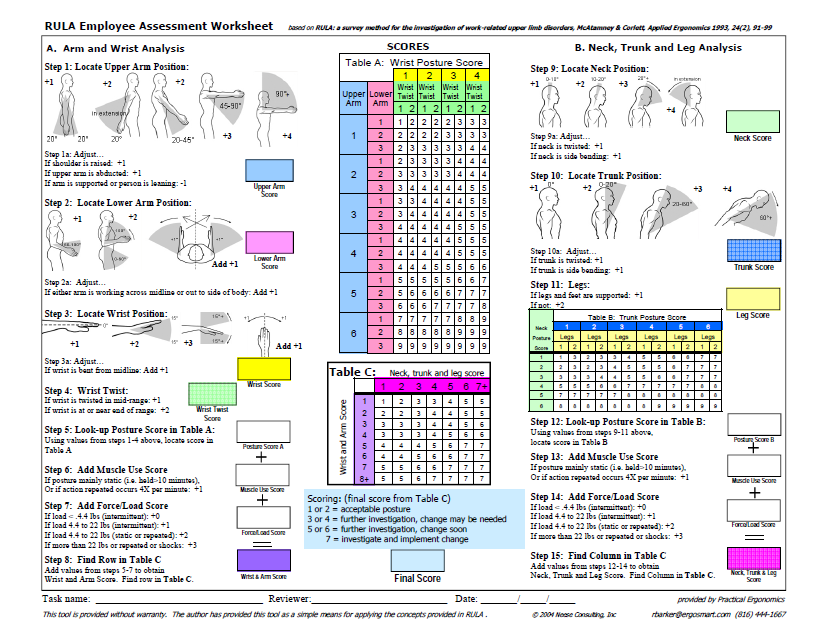
RULA (Rapid Upper Limb Assessment) is a pioneering method in ergonomic risk analysis focusing specifically on the upper limbs, such as arms, shoulders, and wrists, in the workplace. With the comprehensive applications offered by Tokgöz Ergonomics, RULA not only measures physical strain but also integrates with whole-body posture analyses to improve occupational safety, productivity, and employee comfort.
This page details RULA's technical specifications, areas of application, integration with other methods, and the benefits it provides in the workplace.
1️⃣ RULA's Specific Focus and Technical Scope
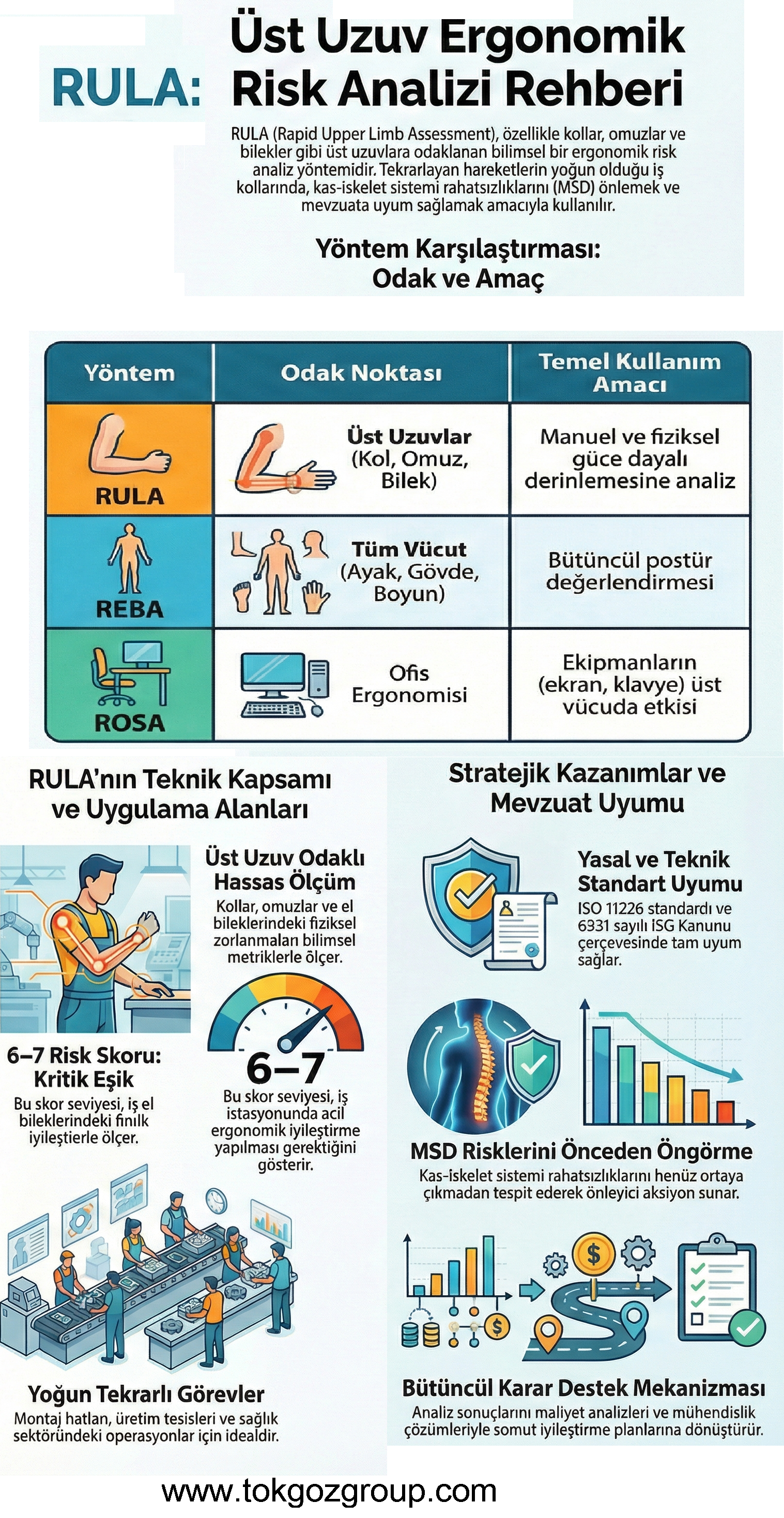
RULA was developed to measure physical strain affecting the upper extremity and is a critical tool, especially in jobs involving intense repetitive movements.
Applications
Repetitive tasks in assembly lines, production facilities, and the healthcare sector
Operations requiring continuous active use of arms and shoulders
Quick and clear determination of ergonomic risk levels at workstations
Critical Threshold Values
RULA scores between 6 and 7 are considered high risk
Identifies areas requiring urgent ergonomic improvement
Complementary Methods
ART (Assessment of Repetitive Tasks) analyzes frequency, posture, and force parameters of repetitive tasks in the upper extremities
Provides holistic risk assessment in field and production environments
2️⃣ Its Place in the Context of Whole Body and Posture Analysis
RULA provides maximum benefit when used in conjunction with other whole body posture analyses.
Differences with REBA
REBA: Analyzes all body regions, including feet, torso, and neck. RULA: Offers a more in-depth analysis focusing on the upper extremities.Relationship with OWAS
OWAS: Provides rapid field scanning.
RULA: Offers detailed metrics for arms and shoulders.
Integration with KIM Methods
KIM-MHO and KIM-ABP methods support RULA's posture data with force and frequency parameters.
Increases analysis depth and improves data accuracy.
Visualization and Software Support
RULA results are visualized using BRIEF or photo-supported methods.
Provides concrete and understandable data for managers and employees.
3️⃣ Legislation, Standards, and Benefits
The use of RULA is implemented within a framework fully compliant with occupational health and safety legislation and provides tangible benefits to businesses.
Standard Compliance
ISO 11226 standard
Law No. 6331 on Occupational Health and Safety
MSD Prevention
Predicts and prevents musculoskeletal disorders (MSDs) before they occur.
Improvement Plans
High-risk scores are transformed into concrete improvement plans through ergonomic engineering solutions, administrative controls, and cost analyses.
4️⃣ Role in Production and Office Ergonomics
RULA is widely used in field and production environments, but when considered in conjunction with office ergonomics, the following stand out:
Comparison with ROSA for the Office
ROSA:
Measures the impact of equipment such as chairs, monitors, and keyboards on upper body posture.
RULA:
Identifies upper limb risks in manual and physical strength-based tasks using metrics.
Holistic Ergonomics Approach
When RULA and ROSA are used together, a comprehensive ergonomics management system emerges that improves employee health and productivity.
✅ Why RULA?
Measures upper limb risks with scientific metrics
Fully compliant with occupational health and safety legislation
Quickly identifies workstations requiring emergency intervention
Provides holistic ergonomic analysis by integrating with other methods
💡 Result
RULA, in line with Tokgöz Ergonomics' philosophy of "the best posture is the next posture": Makes risks visible in jobs where upper limbs are heavily used
Is a decision support tool for Occupational Health and Safety Specialists and Industrial Engineers
Ensures productivity, safety, and employee comfort in the workplace In this version:
RULA, ergonomics, upper limb risk analysis, occupational health and safety