🏢 WERA (Workplace Ergonomic Risk Assessment) – Comprehensive Analysis of Ergonomic Risks in the Workplace
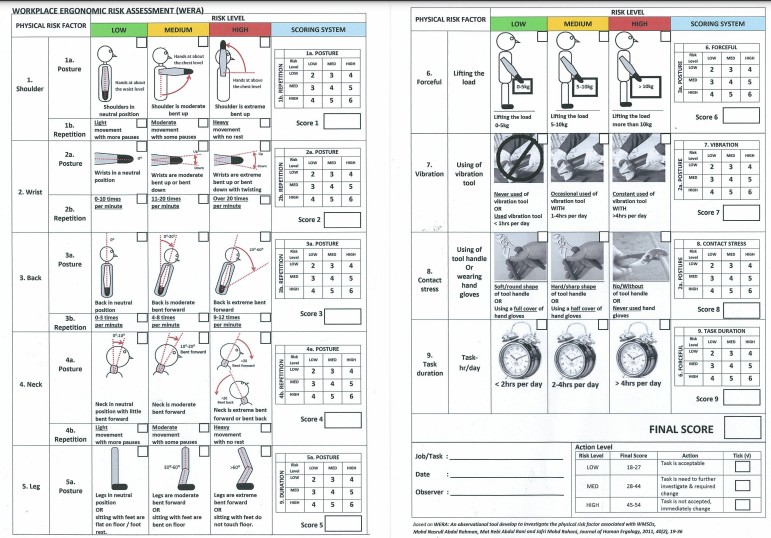
WERA (Workplace Ergonomic Risk Assessment) is a critical scientific method developed to identify ergonomic risks to employees by thoroughly evaluating physical factors in the workplace. With Tokgöz Ergonomics, WERA helps businesses prevent musculoskeletal disorders (MSD), increase productivity, and create safe working environments.
1️⃣ WERA and Physical Factor Analysis
WERA is designed to ensure the harmony between the physical environment and tasks in the workplace and human factors:
Comprehensive Assessment:
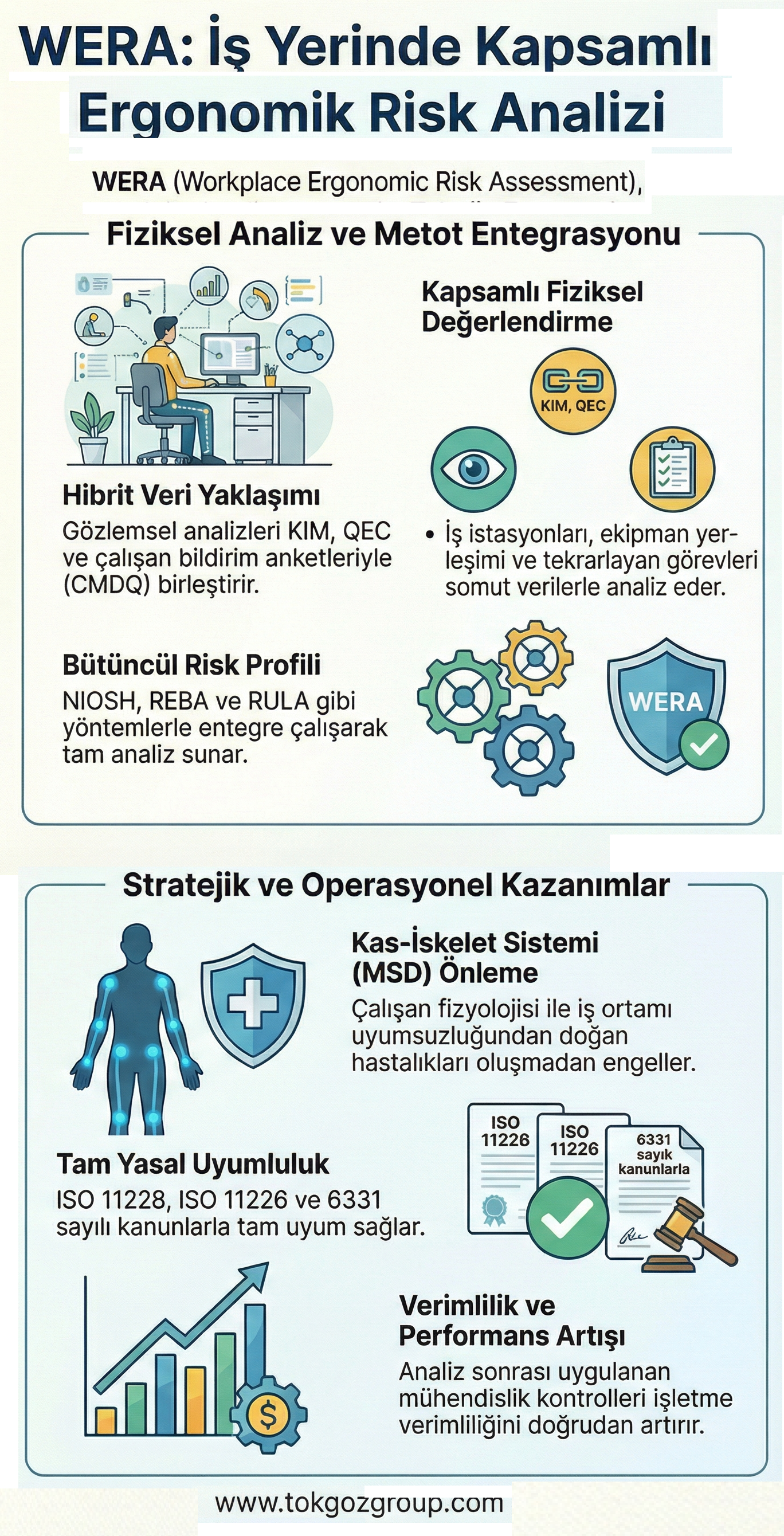
Physical risk factors such as workstations, equipment placement, lifting, carrying, and repetitive tasks are measured.
Risk Identification:
Ergonomic risks to employees are revealed with concrete data, and areas requiring improvement are identified.
Methodological Diversity:
WERA creates a holistic ergonomic risk profile by being used in conjunction with methods such as NIOSH, REBA, RULA, and OWAS.
2️⃣ Integration with Survey and Screening Tools
WERA's physical analysis data provides stronger and more reliable results when supported by survey and field screening tools:
Fast Screening:
Tools such as KIM methods (KIM-LHC, KIM-MHO, KIM-PP) are used to quickly identify risks in the field.
Subjective Data Complementarity:
Surveys such as CMDQ (Cornell) and NOVA NORDIC compare pain and fatigue data received from employees with physical risks.
Hybrid Approach (QEC):
The QEC (Quick Exposure Check) method provides task-based preliminary analysis by combining observational analyses with employee reports.
3️⃣ Preventive Management and Strategic Objectives
The combined use of WERA and screening tools provides businesses with strategic advantages:
MSD Prevention:
Musculoskeletal disorders resulting from mismatch between employee physiology and the work environment are prevented.
Legal and International Compliance:
Provides fully compliant ergonomic risk management in accordance with ISO 11228, ISO 11226, and Law No. 6331.
Increased Productivity:
Engineering and administrative controls implemented after risk analysis directly increase operational productivity.
4️⃣ Training and Application
Tokgöz Ergonomics offers WERA and supporting survey tools not only theoretically but also practically:
Field Measurements and Case Analyses:
Participants collect and analyze data by taking measurements in a real work environment.
Acquisition of Practical Competencies:
Occupational safety and health (OSH) specialists, industrial engineers, and managers gain the ability to translate knowledge into practice and create sustainable improvement plans.
Sustainable Ergonomics Culture:
Training aims not only to identify risks but also to develop solutions integrated into work processes and to protect employee health in the long term.
✅ Why WERA?
It measures the physical risks employees are exposed to within a scientific framework.
It integrates employee experience and rapid analysis capabilities with survey and screening tools.
It increases workplace safety by predicting MSD risks in advance.
It provides productivity and sustainable improvement plans for businesses.
💡 Conclusion
In line with Tokgöz Ergonomics' philosophy that "the best posture is the next posture," WERA evaluates physical risks in the workplace using scientific methods. Supported by survey and screening tools, it contributes to creating a healthy, safe, and productive work environment.