0 532 516 96 76 Broşür
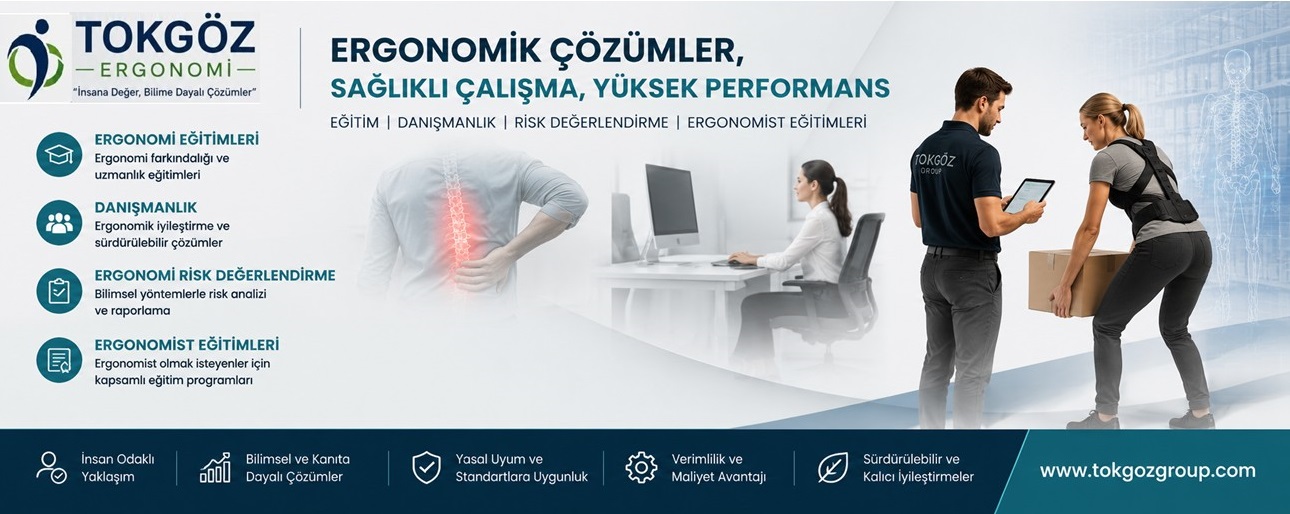
BÜTÜNSEL ERGONOMİ
🎯 Ergonomi = İnsan + İş + İş İstasyonu + Ekipman + Organizasyon + Çevre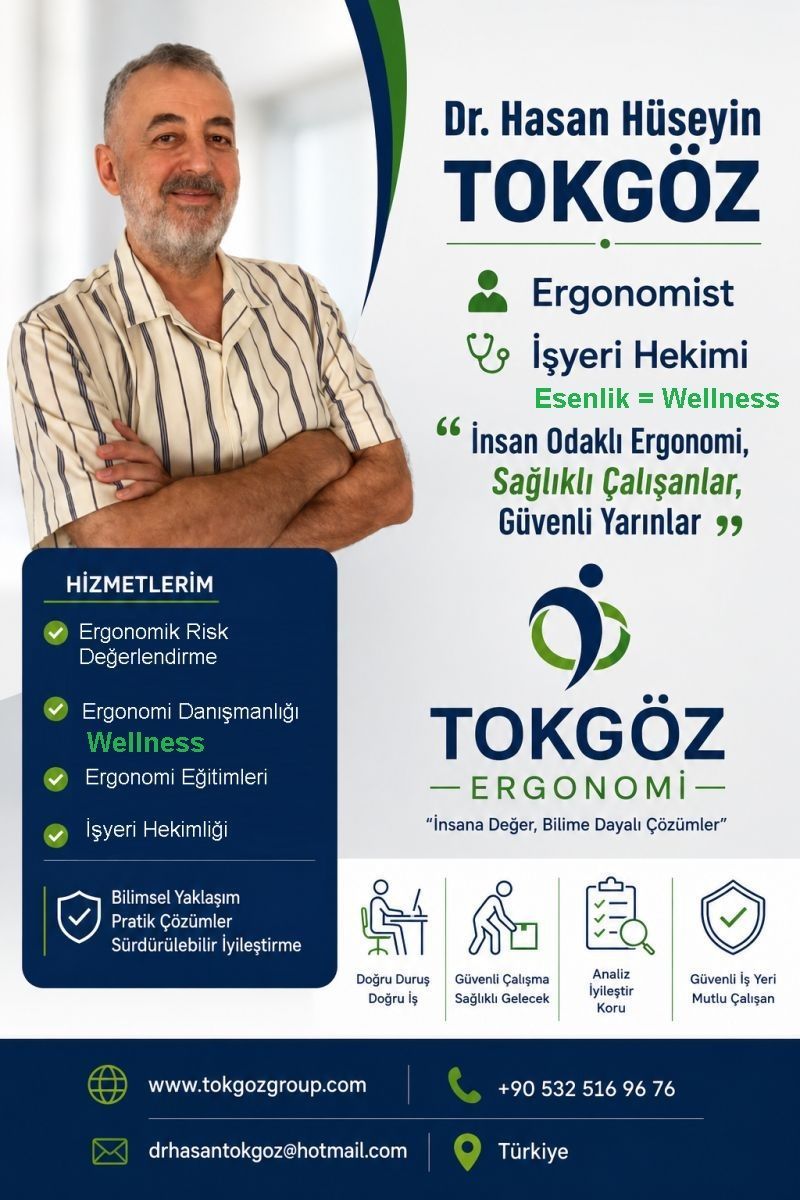
TOKGÖZ ERGONOMİ | BÜTÜNSEL ERGONOMİ
“En iyi duruş bir sonraki duruştur.”
Ergonomi yalnızca postür analizi değildir.
Ergonomi = İnsan + İş + İş İstasyonu + Ekipman + Organizasyon + Çevre
Tokgöz Ergonomi’nin amacı yalnızca risk skorunu hesaplamak değil; riski azaltmak ve iyileşmeyi ölçmektir.
🔹 1. ERGONOMİ EĞİTİMİ 🎓
Temel, fiziksel, bilişsel, organizasyonel ve katılımcı ergonomi; kas-iskelet riskleri, saha uygulamaları, vaka analizleri, çalışan katılımı ve ergonomi kültürü.
🔹 2. OFİS ERGONOMİSİ 💻
Masa + Sandalye + Monitör + Klavye + Mouse + Çalışan
Oturma postürü, boyun/omuz riskleri, ekranlı araçlarla çalışma, ROSA, checklist, risk değerlendirmesi ve çalışan eğitimi.
🔹 3. ÜRETİM ERGONOMİSİ 🏭
Elle kaldırma/taşıma, yük elleçleme, itme-çekme, tekrarlı işler, statik/dinamik postür, kuvvet, frekans, çalışma yüksekliği ve iş istasyonu tasarımı.
📊 4. ERGONOMİK RİSK DEĞERLENDİRME
Postür: REBA | RULA | OWAS
Manuel kaldırma-taşıma: NIOSH | MAC | KIM-LHC | Snook | WISHA
İtme-çekme: KIM-PP | RAPP
Tekrarlı işler: OCRA | ART | JSI
Ofis: ROSA
Ayakta Çalışma: VerV
Genel: WERA | QEC | BRIEF | OWAS | HMD QEC | ERGOSCORE
Semptom: CMDQ Cornell | Nordic
Sürücü: Ergotest
🔄 5. RİSK YÖNETİMİ
Tehlikeyi belirle → Görevi analiz et → Maruziyeti değerlendir → Yöntemi seç → Skoru belirle → Önceliklendir → Kontrol et → Uygula → Yeniden değerlendir → İyileştir
🛠️ 6. KONTROL HİYERARŞİSİ
Ortadan kaldırma → İkame → Mühendislik → İş organizasyonu → İdari kontroller → Eğitim → Çalışan katılımı
Öncelik; iş istasyonu ve ekipman tasarımı, çalışma yüksekliği, malzeme yerleşimi, mekanik yardımcılar, otomasyon ve ergonomik ekipmanlardır.
🦴 7. KAS-İSKELET SİSTEMİ RİSKLERİ
Bel, boyun, omuz, dirsek, el bileği, el, diz ve alt ekstremite.
Ayrıca yorgunluk, ağrı, MSD, semptomlar, devamsızlık ve iş gücü kaybı değerlendirilir.
🧠 8. PSİKOSOSYAL RİSKLER ERGONOMİSİİ
ISO 45003 yaklaşımıyla iş yükü, zaman baskısı, iş kontrolü, çalışma ilişkileri, rol belirsizliği, iş-yaşam dengesi, vardiyalı çalışma, tükenmişlik ve çalışan katılımı ele alınır.
📚 9.ERGONOMİYE DAİR STANDARTLAR VE YASAL UYUM
ISO: 45001 | 45002 | 45003 | 6385 | 11226 | 11228 | 14738 | 15534
Mevzuat: 6331 sayılı İSG Kanunu, Elle Taşıma İşleri Yönetmeliği, Ekranlı Araçlarla Çalışma Yönetmeliği ve risk değerlendirmesi mevzuatı.
🤝 10. ERGONOMİ DANIŞMANLIĞI
Ergonomik risk değerlendirmesi, iş istasyonu ve üretim/ofis ergonomisi, ürün tasarımı, masa-sandalye seçimi, proje danışmanlığı, webinar ve kongre danışmanlığı.
📏 11. ÖLÇME → RAPORLAMA → İYİLEŞTİRME
Gözlem → Çalışan görüşü → Ölçüm → Yöntem → Skor → Risk seviyesi → Öneri → Aksiyon → Sorumlu/termin → Yeniden ölçüm → İyileşme skoru
📈 12. ERGONOMİK PERFORMANS
Başarı; risk skorları ve MSD şikâyetlerinin azalması, iş gücü kaybı ve devamsızlık, verimlilik, çalışan memnuniyeti, farkındalık ve yatırım geri dönüşü ile ölçülür.
🟦 13. TOKGÖZ ERGONOMİ YAKLAŞIMI
İnsan + İş + İş İstasyonu + Ekipman + Organizasyon + Çevre + Psikososyal Faktörler
= BÜTÜNSEL ERGONOMİK RİSK YÖNETİMİ
🔁 14. SÜREKLİ İYİLEŞTİRME
Planla → Riski belirle → Ölç → Analiz et → Müdahale et → Kontrol et → Yeniden ölç → Standardize et
🎯 TOKGÖZ ERGONOMİ’NİN ÖZETİ
Eğitim + Ölçüm + Risk Değerlendirmesi + Danışmanlık + Mühendislik Çözümleri + Yönetim Sistemi + Sürekli İyileştirme = BÜTÜNSEL ERGONOMİ
Siz ergonomik riskleri yalnızca ölçüyor musunuz, yoksa ölçtüğünüz riski gerçekten azaltıyor musunuz?
📩 İşletmenize özel ergonomik ön değerlendirme için mesaj atmanız yeterli.

izmir ergonomi eğitim, ergonomi risk değerlendirme, ergonomi risk analizi,Ergonomics İşSağlığıVeGüvenliği RiskDeğerlendirmesi ErgonomikRiskDeğerlendirmesi ISO45001 ISO45003 ElleTaşıma KasİskeletSistemi İnsanFaktörleri VisualManagement SafetyCulture OccupationalHealth Ergonomist İşyeriHekimi EndüstriyelErgonomi İşHijyeni HumanPerformance Sürdürülebilirlik TokgozErgonomi Ergonomi İSG Ergonomics İşSağlığı Wellbeing sağlık DrHasanHüseyinTokgöz
 |
TOKGÖZ İŞSAĞLIĞI EĞİTİM DANIŞMANLIK SANAYİ VE TİCARET LİMİTED ŞİRKETİ |
TOKGÖZ İŞSAĞLIĞI EĞİTİM DANIŞMANLIK SANAYİ VE TİCARET LİMİTED ŞİRKETİ © 2009 Tokgozgroup.com